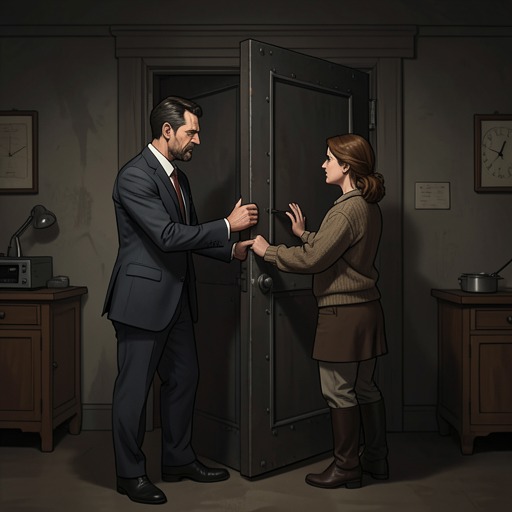
Jeremy Fitzgerald fails to prevent Natasha from leaving the country
The Sun is Also a StarJeremy Fitzgerald’s failure to stop Natasha Kingsley from leaving the United States turns an apparent legal defeat into a failure of responsibility: he tells Daniel Bae that the judge would not reverse Natasha’s Voluntary Removal, while the truth is that Jeremy missed the appointment with the judge who might have done so. The consequences fall on Natasha and Daniel, but the decisive mistake belongs to the lawyer entrusted with her case.
Legal and Personal Background
Natasha’s family faces removal after her father’s arrest brought their undocumented status to the attention of the authorities. Several weeks after the arrest, the family received a Notice to Appear from the Department of Homeland Security. At an initial hearing, they could accept Voluntary Removal or seek Cancellation of Removal. Natasha’s father initially rejected voluntary departure, and the family pursued cancellation with a lawyer they could afford.
Their case rested in part on Natasha’s younger brother Peter, who was born in the United States. The family understood that cancellation required ten years of residence, good moral character, and proof that removal would cause extreme hardship to a U.S.-citizen spouse, parent, or child. They hoped Peter’s citizenship would provide a way to stay. At the Merits Hearing, however, the judge denied the case. The family’s lawyer advised against appealing, saying they had no case and were out of options; voluntary departure, she explained, would avoid a deportation on their records and preserve hope of returning someday. Natasha nevertheless believed there might still be some way to prevent her family’s separation from the country she called home.
That desperation brings Natasha to the United States Citizenship and Immigration Services building in downtown Manhattan, even though it is not the agency with jurisdiction over her case. She knows her family is scheduled to leave that night and treats the visit as a last attempt to find help. The legal avenues have narrowed from an initial cancellation claim to an accepted Voluntary Removal order; her decision to seek assistance reflects not confidence in a particular procedure but the sense that there is nowhere else to turn.
Daniel Learns the Outcome
Jeremy tells Daniel that he could not stop the deportation and that the judge would not overturn the Voluntary Removal. Daniel initially cannot accept the news. He does not know what the legal order means, and hopes that the file might concern another Natasha Kingsley. When Jeremy slides the official document across the desk, Daniel sees Natasha’s full name, Natasha Katherine Kingsley, and the confirmation becomes personal rather than abstract.
Daniel responds with anger, accusing Jeremy of not trying hard enough. He suspects that Jeremy’s relationship with his secretary may explain the failure, and imagines him breaking promises to his wife, children, and Natasha. He insists that Natasha should not pay for her father’s mistakes. His protest draws a distinction between Samuel Kingsley’s responsibility for the events that exposed the family’s status and Natasha’s own lack of responsibility for those events. Jeremy tries to calm Daniel, but Daniel sees the deportation not as a missed appointment or a delay that can be corrected later, but as a decision with immediate consequences for Natasha’s life and their relationship.
The Failure Behind the Explanation
Jeremy does not tell Daniel what actually happened. He missed the court appointment with the judge who could have reversed the Voluntary Removal. Instead of going to see the judge, he spent the afternoon at a hotel with Hannah Winter, with whom he is in love. The explanation he gives Daniel—that the judge would not overturn the order—therefore hides a crucial difference: the court did not reject an argument Jeremy presented at that appointment; Jeremy was absent, and the opportunity to ask the judge for relief was lost.
Daniel’s suspicion about an affair is directionally close but wrong in its particulars. Jeremy’s failure does arise from his divided personal life, but it is his relationship with Hannah, not the secretary Daniel imagines, that takes him away from the hearing. Jeremy’s silence protects him from having to confess the immediate cause, while leaving Daniel to interpret the outcome as a failed legal effort. The account later supplies the fact he withholds, making the scene’s apparent helplessness look different: Jeremy had not simply exhausted every option; he failed to appear where one remaining possibility could have been tested.
Consequences and Significance
The judge’s decision, as Jeremy presents it, means Natasha is still being deported that night. His missed appointment makes that outcome more than a general consequence of the family’s unsuccessful cancellation case: it closes a specific chance to challenge the departure order. The contrast is sharp. Natasha went to an agency that could not help because she did not know where else to go; Jeremy knew which judge could consider the case and did not attend.
The failure also becomes a turning point in Jeremy’s own life. He will think repeatedly about Daniel’s words and remember the devastation on Daniel’s face. Within the next month, he tells his wife that he no longer loves her and that leaving will be better for her and the children. He then calls Hannah, makes promises to her, and keeps them. This later change does not undo the harm to Natasha or restore the missed hearing. Instead, it places the professional failure beside a personal choice Jeremy eventually makes openly: he leaves the marriage he had continued to inhabit, but only after his concealed affair has helped determine another family’s immediate fate.